
Customers today don’t interact with brands on just one channel.
They receive an OTP on SMS.
They reply on WhatsApp.
They miss a call and call back later.
They read emails at night.
They expect replies instantly — and they expect consistency.
Here’s the problem.
Most businesses still use separate tools for each channel.
One tool for SMS.
Another for WhatsApp.
Another for email.
Another for voice.
What this really means is:
- broken conversations
- delayed follow-ups
- lost leads
- frustrated customers
That’s why businesses across the world are now moving to a single omnichannel marketing platform.
What Is an Omnichannel Marketing Platform?
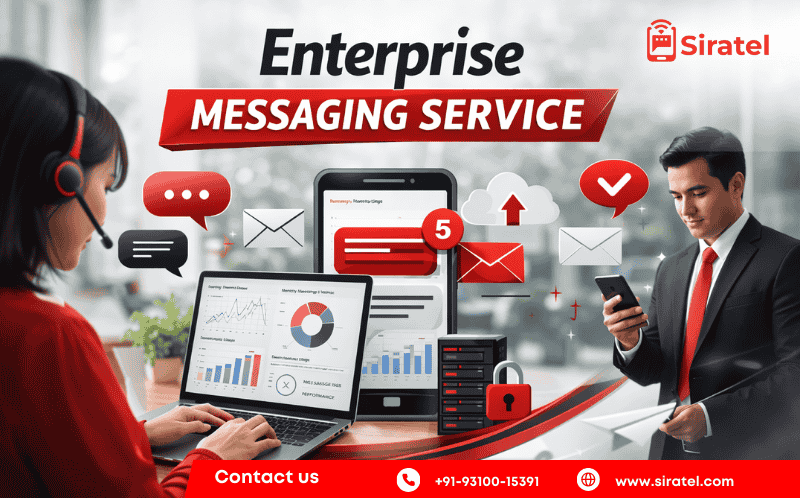
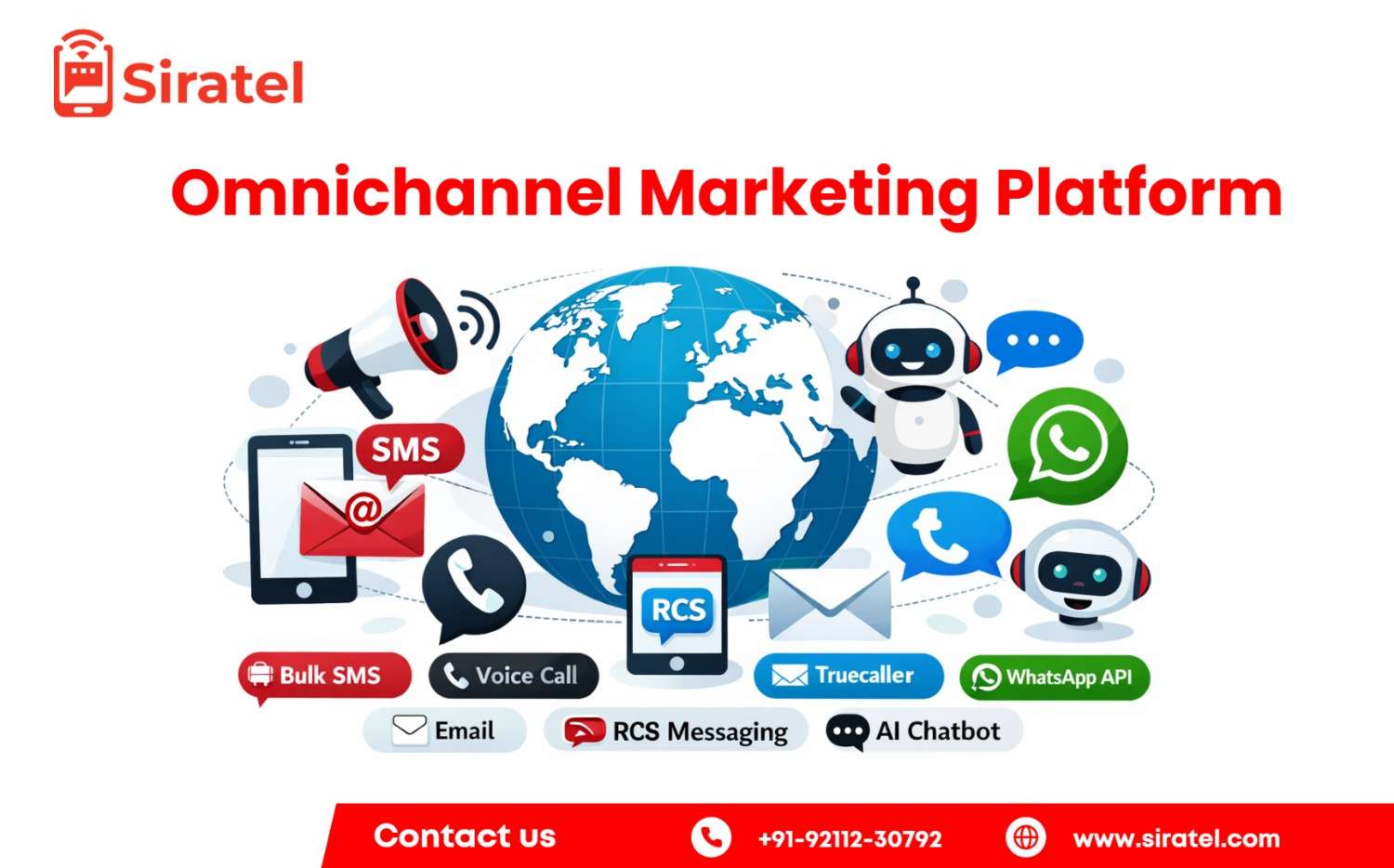
An omnichannel marketing platform is a system that lets businesses communicate with customers across multiple channels using one platform, one customer context, and one automation logic.
These channels usually include:
- SMS Marketing Platform
- WhatsApp Marketing Platform
- Voice calls Platform
- Email Marketing Platform
- RCS Platform
- Web or chatbot conversations
In simple words
It means your customer can:
- Receive an OTP on SMS
- Continue the conversation on WhatsApp
- Get a reminder via voice call
- Receive a follow-up email
…and your team sees everything in one place.
No repeated messages.
No confusion.
No missed context.
Omnichannel Marketing Platform vs Multichannel Communication
Many platforms claim “omnichannel” but deliver only multichannel.
Multichannel
- Uses multiple channels
- Channels work separately
- Customer data is fragmented
Example:
A customer gets an SMS offer.
Replies on WhatsApp.
Your team has no idea it’s the same person.
Omnichannel
- Channels are connected
- One customer profile
- Conversations flow naturally
Example: No reply on WhatsApp → system triggers SMS → no response → voice fallback →The agent picks up with full context.
That continuity is what makes an omnichannel marketing platform truly effective.
Why Omnichannel Marketing Platforms Matter in 2026
Customer behavior has changed permanently.
1. Customers switch channels instantly
They don’t care which channel you prefer.
They reply where it’s easiest for them.
2. Speed decides conversions
Leads go cold fast.
Delayed follow-ups cost real revenue.
3. Trust is fragile
Unknown numbers get ignored.
Unverified messages get blocked.
Spam perception kills engagement.
4. Global communication is normal
Businesses today operate across Australia, Bangladesh, Brazil, Mexico, Chile, UAE, Malaysia, Germany, India, and beyond.
Each country has:
- different regulations
- different preferred channels
- different delivery challenges
A serious omnichannel marketing platform provider like Siratel must handle all of this.
Who Needs an Omnichannel Marketing Platform?
This isn’t just for large enterprises.
You need omnichannel if:
- You generate leads online
- You send OTPs or alerts
- You run promotions or reminders
- You handle customer support
- You operate in more than one country
Common industries:
- Fintech & BFSI
- Healthcare
- SaaS & technology
- eCommerce & retail
- Logistics
- Education
- Service businesses
If customer communication affects revenue, omnichannel is no longer optional.
The Problem With Most “Omnichannel” Platforms
Here’s the truth most vendors won’t say.
Many platforms don’t own the delivery
They:
- rely on third-party aggregators
- resell APIs
- break when scale increases
Many platforms are app-only
They work well only if:
- You have a mobile app
- Users allow push notifications
That fails for:
- lead generation
- OTP-heavy use cases
- voice-first regions
Many platforms are too complex
Heavy CDPs.
Long implementations.
Consultants required.
Most businesses don’t need that.
They need reliable communication that converts.
What Actually Matters in an Omnichannel Marketing Platform (2026)
Must-have features
- Unified customer context across channels
- SMS, WhatsApp, Voice, Email & RCS support
- Smart routing and fallback logic
- Automation workflows (no-code or low-code)
- High deliverability and uptime
- Global compliance support
- Real-time logs and analytics
- API access for developers
- Human + bot conversation handling
Feature table
| Feature | Why it matters |
|---|---|
| Smart routing | Ensures messages are delivered |
| Voice fallback | Saves lost conversions |
| WhatsApp + SMS | Covers most global markets |
| Verified sender IDs | Builds trust |
| Automation | Saves time, increases speed |
| Analytics | Improves ROI |
| APIs | Enables scale |
Siratel: A True Omnichannel Marketing Platform Built on CPaaS
Siratel is not a marketing plugin. It is a full-scale omnichannel communication platform powered by enterprise CPaaS infrastructure.
What makes Siratel different
Siratel doesn’t just manage campaigns. Siratel owns the communication stack.
- ₹500+ Crore valuation
- 3 Billion+ monthly transactions
- 1,700+ TPS throughput
- Tier-1 global operator routes
- ISO 9001:2015 certified infrastructure
- Higher uptime
This means:
- faster delivery
- higher reliability
- better global reach
Siratel’s Omnichannel Capabilities
SMS Solutions
- OTP & 2FA delivery
- Transactional SMS alerts
- Promotional campaigns
- Smart routing & redundancy
Built for: fintech, healthcare, logistics, and e-commerce.
Learn more about SMS Solutions
WhatsApp Business API
- Official Meta-approved access
- Transactional + promotional templates
- Two-way conversations
- Chatbot + live agent support
Perfect for: conversational commerce and support.
Learn more about WhatsApp Business API
Voice Solutions
- IVR systems
- Voice OTP
- Missed call services
- Outbound dialers
- Toll-free & click-to-call
Critical for: authentication, reminders, high-intent follow-ups.
Learn more about Voice Call Solutions
RCS Business Messaging
- Verified branded sender
- Rich media messages
- Buttons, carousels, CTAs
- High conversion templates
Ideal for: Android-heavy markets and rich campaigns.
Learn more about RCS Business Messaging
Email API
- High-volume transactional emails
- Marketing emails
- SMTP & HTTP APIs
- SPF, DKIM, DMARC support
Ensures: strong inbox placement and delivery.
Learn more about Email API
AI Chatbot (Sirabot)
- Website, WhatsApp, Instagram, Messenger
- Lead capture & support automation
- NLP-based conversations
- Smooth agent handoff
Learn more about AI Chatbot (Sirabot)
Truecaller Verified Business
- Brand name & logo on calls
- Higher pickup rates
- Fraud prevention
Learn more about Truecaller Verified Business
Real Omnichannel Journeys With Siratel (Examples)
Lead conversion flow
Ad → landing page → WhatsApp message → no reply → SMS → no reply → voice call → agent closes the deal.
OTP & onboarding
OTP via SMS → WhatsApp onboarding → email follow-up → chatbot support.
Missed call lead capture
User gives a missed call → SMS confirmation → WhatsApp conversation → sales callback.
This is practical omnichannel — not theory.
Omnichannel Advertising vs Omnichannel Engagement
Many platforms confuse the two.
Omnichannel advertising
- Paid ads
- Pre-click focus
- Media spend optimization
Omnichannel engagement (Siratel)
- Owned channels
- Post-click communication
- Conversions & retention
Ads bring traffic. Siratel converts traffic.
Why Siratel Works Better for Global Businesses
Siratel supports communication across 130+ countries, including: Australia, Bangladesh, Brazil, Mexico, Chile, UAE, Malaysia, Germany, India & 130+ countries.
Country-first execution
- SMS-first markets
- WhatsApp-dominant regions
- Voice-heavy use cases
- Compliance-aware delivery
Most SaaS platforms don’t handle this well. Siratel was built for it.
CPaaS vs Marketing Automation Tools
| Aspect | CPaaS (Siratel) | Marketing SaaS |
|---|---|---|
| Delivery control | High | Low |
| Global scale | Strong | Limited |
| Voice & OTP | Native | Weak |
| Core | Add-on | |
| Flexibility | High | Restricted |
| Time to value | Fast | Slower |
Siratel gives you control + scale + speed.
Learn about the Benefits of CPaaS for Modern Businesses
How to Choose the Right Omnichannel Marketing Platform Provider
Ask these questions:
- Do they own the delivery infrastructure?
- Can they handle SMS, WhatsApp, Voice & Email together?
- Is fallback logic built-in?
- Do they support global compliance?
- Can I automate without heavy IT dependency?
- Are analytics real-time?
If the answer is no, keep looking.
Pricing: What Impacts Cost in Omnichannel Platforms
Pricing depends on:
- channels used
- message volume
- countries
- automation complexity
- integrations
Cheap platforms fail at scale. Reliable platforms protect revenue.
Contact Siratel for affordable pricing.
Final Thoughts: Why Siratel Is Built for 2026 and Beyond
Most omnichannel platforms talk about journeys.
Siratel executes them.
Most platforms integrate channels.
Siratel owns and connects them.
Most platforms focus on engagement metrics.
Siratel focuses on delivery, trust, and conversion.
If your business depends on customer communication, Siratel is not just a tool — it’s infrastructure.
Ready to Experience True Omnichannel Communication?
Whether you’re a startup or an enterprise, Siratel helps you:
- communicate faster
- convert more
- scale globally
- stay compliant
Smart communication starts here.
FAQs on Omnichannel Marketing Platform
How is an omnichannel marketing platform different from multichannel tools?
An omnichannel marketing platform is a system that allows businesses to communicate with customers across multiple channels like SMS, WhatsApp, voice calls, email, and RCS using one unified platform. All conversations stay connected, so customers get a consistent experience no matter which channel they use.
Is omnichannel marketing better than multichannel marketing?
Yes. Omnichannel marketing is better because it creates a continuous customer experience across channels. Multichannel marketing often leads to repeated messages, missed context, and lower conversions, while omnichannel communication improves response rates and customer trust.
What channels should a modern omnichannel marketing platform support?
A modern omnichannel marketing platform should support:
SMS
WhatsApp Business API
Voice calls and IVR
Email
RCS messaging
Chatbots and live agents
Supporting only email or app push notifications is not enough in 2026.
Do I need a mobile app to use an omnichannel marketing platform?
No. A good omnichannel marketing platform works even if you don’t have a mobile app. Platforms like Siratel support SMS, WhatsApp, voice, email, and chatbots, which are ideal for lead generation, OTPs, reminders, and customer support without requiring an app.
Is omnichannel marketing only for large enterprises?
No. Omnichannel marketing platforms are useful for startups, SMBs, and enterprises. Any business that sends OTPs, handles leads, runs promotions, or supports customers across multiple channels can benefit from omnichannel communication.
What industries benefit most from omnichannel marketing platforms?
Industries that benefit the most include:
Fintech and BFSI
Healthcare
eCommerce and retail
SaaS and technology
Logistics and delivery
Education
Service-based businesses
If customer communication affects revenue, omnichannel matters.
What is the role of CPaaS in an omnichannel marketing platform?
CPaaS (Communication Platform as a Service) provides the infrastructure behind messaging channels like SMS, voice, WhatsApp, and email. An omnichannel marketing platform built on CPaaS, like Siratel, offers better delivery, scalability, and global reach than platforms that rely only on third-party integrations.
Why do many omnichannel platforms fail at scale?
Many omnichannel platforms fail because they:
don’t own delivery infrastructure
depend on third-party aggregators
lack fallback logic
struggle with global compliance
At scale, this leads to delays, message failures, and lost conversions.
How does fallback logic improve omnichannel communication?
Fallback logic automatically switches channels when a message fails or gets no response. For example, if a WhatsApp message is not delivered, the system can send an SMS or trigger a voice call. This ensures higher delivery and better conversion rates.
What is the difference between omnichannel advertising and omnichannel engagement?
Omnichannel advertising focuses on paid media before the click, such as ads on Google, Meta, or retail platforms. Omnichannel engagement focuses on what happens after the click—SMS, WhatsApp, voice calls, emails, and conversations that convert leads into customers.
Can an omnichannel marketing platform work across multiple countries?
Yes, but only if the provider supports global routing, compliance, and local regulations. A strong omnichannel marketing platform provider should support communication across multiple countries with region-specific channel preferences like WhatsApp, SMS, or voice.
What metrics should I track in an omnichannel marketing platform?
Important metrics include:
delivery rates
response rates
conversion rates
fallback success
channel performance
engagement timelines
Real-time analytics help improve ROI and customer experience.